
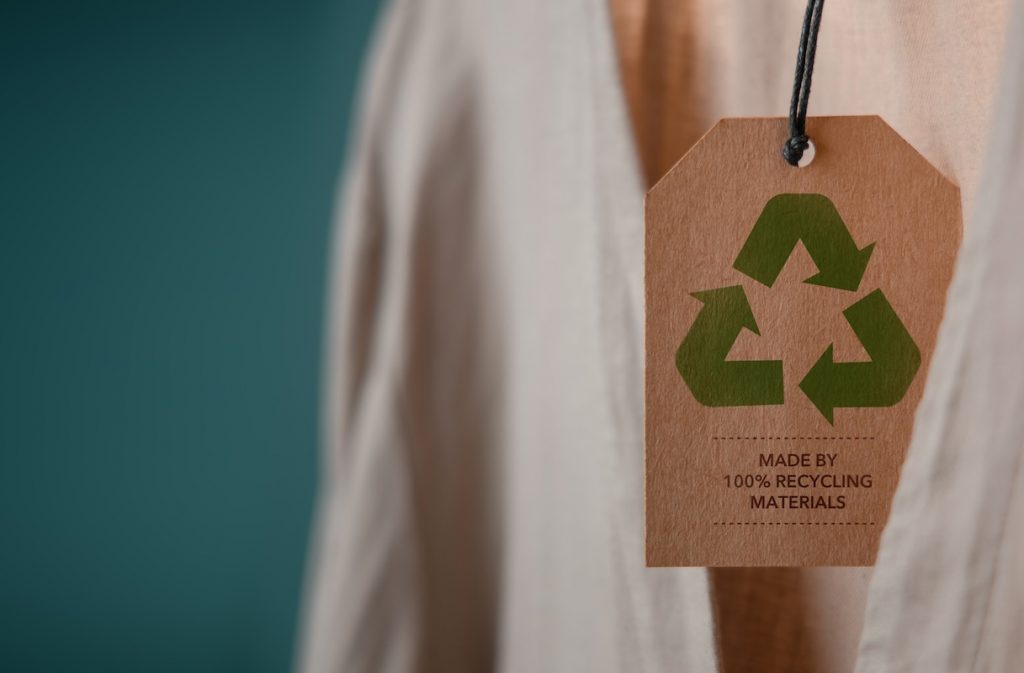
The fashion industry is evolving, and so are the skills companies are looking for. As consumers increasingly turn toward sustainable brands, thrifted goods, and capsule wardrobes, Canadian fashion companies are rethinking their hiring strategies to attract talent who can drive sustainability, innovation, and change.
Sarah Jay, a senior sustainability consultant and former executive director of Fashion Revolution, the shift is both necessary and exciting.
“Consumers are increasingly aware. They know that the cost of a fast fashion t-shirt is not representative of the material and human resources that go into that actual t-shirt,” Jay tells Style Nine to Five.
She adds that a growing number of consumers don’t want to be involved in exploitative, extractive supply chains and make purchases from brands that don’t care about the overall outcomes that they’re having.
In fact, the fashion sector has ranked among the most environmentally harmful industries, as the total greenhouse gas emissions from textiles production are projected at 1.2 billion tonnes annually and by some estimates, sector emissions are expected to rise by more than 60 percent by 2030.

For Jay, her journey into sustainability began with a love of fashion and craftsmanship, but also her concern about the industry’s social and environmental implications. She was curious about the lifecycle of clothing, particularly whether chemical off-gassing or the substances in the fabrics themselves might be impacting her health.
Ultimately, her concerns led her to work with Fashion Takes Action in 2007, a partnership that lasted 13 years and helped her realize she was not alone in questioning the industry’s broader impacts. Working as a stylist during this time also broadened her awareness of these issues.“I just became curious about the volume of clothing that I was exposed to, and how we managed to make so much, and where it ultimately goes,” she recalls.
Change in Consumer Expectations
Over the last decade, Jay has seen consumer expectations evolve, shaping the types of roles companies need to fill, especially in sustainability.
“Sustainability is best integrated from the ground up. It shouldn’t be an afterthought. Roles in product development, materials procurement, operations – those are all important roles that allow you to really have impact or improve impact even though they may not have the word sustainability in the title,” she says.
She notes that brands increasingly seek talent who can implement sustainable innovations and messaging across different roles, such as communications or marketing, though sometimes matters of sustainability also fall under legal and compliance departments. She explains that when budgets are tight, sustainability roles may even be folded into multiple departments.
Jay explains that Sustainability roles ideally require an understanding of environmental science, labour law, human rights as well as the various voluntary and mandatory standards and frameworks brands are obligated to comply with.
According to a McKinsey survey, 67% of consumers view the use of sustainable materials as a key factor when making purchasing decisions. Companies that do not embrace authentic sustainable practices risk losing both consumer confidence and market share.
Jay says that Canadian brands face unique challenges in embedding sustainable practices into hiring. As a smaller market that does not always have international operations, brands are obligated to comply with federal legislation and voluntary frameworks must navigate both domestic and global frameworks.
“Per capita, Canada is one of the highest emitters of greenhouse gases … I believe it is our responsibility to do everything we can to prioritize decarbonization and support the transition to clear energy sources in fashion’s supply chains and beyond,” Jay points out.
Future of Sustainable Fashion Jobs
Despite these hurdles, there are opportunities and ways for early-career professionals who want to influence change and find a sustainable fashion job.
Sustainability-minded talent can shape corporate culture, operational processes, and product strategies, while also responding to evolving consumer preferences. Brands now actively seek employees who can help them integrate ethical and environmental considerations into every level of their business.
Jay encourages anyone interested in sustainable fashion to see the challenges as opportunities. Professionals who understand or are passionate about sustainable practices in fashion can influence decisions across many roles, even if their role does not explicitly carry “sustainability” in the title or job description.
“Don’t be intimidated by the scope of the challenges and number of problems. Chipping away to any degree is valuable, and a sustainable contribution to the fashion industry is the most important one you can make,” Jay says.
Key Takeaway
The push for sustainability is transforming hiring in Canadian fashion. Companies increasingly seek talent who can integrate environmental and social responsibility throughout all areas such as operations, sourcing, marketing, and product development. Early-career professionals are wanting to branch out in sustainable areas and can make a meaningful impact by combining curiosity about the industry, specialized skills, and a commitment to shaping corporate culture. Even small contributions are valuable, helping brands meet evolving consumer expectations and advance broader sustainability goals.
Written by Negin Nia – Negin Nia (she/her) is a writer and producer who is focused on community stories involving lifestyle, fashion, and business. Her work has appeared in outlets and magazines such as The Globe and Mail, CBC News, and the Montecristo Magazine.